|
This is a past page
becoming present. Keep visiting it, and someday all the links will
work. |
|
Home Site Map Bulletin Board Site Search
AMERICAN BUDDHA -- EVOLVE OR DIE, EARTHLINGS |
||
 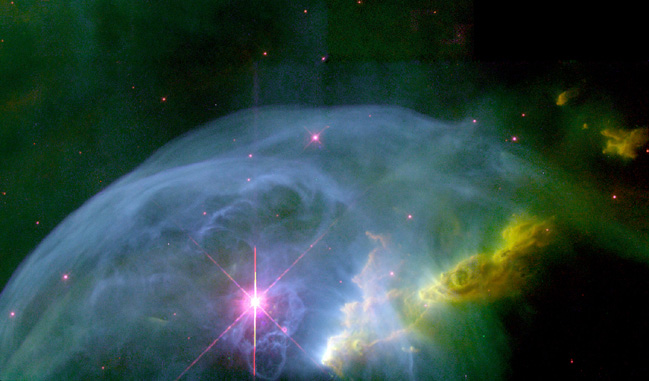     
Evolutionary Realism & The Nonviolent Imperative Faith Versus Evidence Either the universe came into existence due to a thought in the mind of G-d, or it evolved into its present shape based on the inherent character of space, time, energy, and atomic structures. When Charles Darwin and his contemporaries elaborated his theory of natural selection, they assumed things were still happening as they had during past geological aeons. They discovered no time unaccounted for in the geological history of the earth. They found no evidence of an era when natural laws operated differently, permitting men to part the seas with a staff, women to conceive without sex, or a young man to rise from the dead after a grueling day-long crucifixion. They weren't courageous for rejecting these miraculous notions. They were merely honest. Without evidence, they could not believe. All the evidence indicates that life really is fleeting, that death is for keeps, and that sentimentality fabricates imagined lifetimes before birth and after death, arguing incessantly for the substance of these imaginations, never piling one grain of evidence upon another to support these fond beliefs. Moreover, while fearing to suffer losses in the realm of faith, religionists discount the benefit to their sense of rationality. Therefore they fail to appreciate the wonder of inhabiting a world built of atoms that as Lucretius noted, are so invulnerable to destruction that after aeons of use, they are not worn out. Atoms Are No Accident The existence of atoms is no accident. Atoms are born in the furnaces of collapsing stars, are spewed out into the cosmic void, and take shape as plasmic energy cools. Atoms form into concentric energy strata of electrons orbiting 'round nuclei composed of subatomic particles, obeying the inscrutable laws of quantum mechanics, so far only formulated in terms of probabilities. The simplest atoms are hydrogen atoms, having a nucleus and a single electron. Hydrogen atoms that have two electrons are called deuterium, and figure importantly in the creation of the hydrogen bomb. All atoms have a specific atomic weight, which is to say, a small gravitic force that causes them to be attracted to other atoms. Atoms can amass a great pile of neutrons and protons to form their nucleus, and as their nuclei increase in weight, they can support more electrons in orbit. The biggest atoms stack electrons out five levels deep. Heavy metals have lots of mass in their nuclei and many electrons in orbit. Atoms that have unstable nuclei are called "radioactive," because they emit subatomic particles that generate among other things, radio waves. Based upon their atomic weight, which is to say, their structure, atoms are classified into elements. Electrons are the locking mechanisms between atoms that allow atoms of different elements to link up and form chemical compounds. Thus two hydrogen atoms link their electrons with a single oxygen atom to form water. Why do the atoms of hydrogen link up with the oxygen atoms? It is in their nature. Whence arises this nature? That is, and likely will remain, the open question in this concrete universe. Whatever the arising place of this nature of all things, it has order and structure at its core. While chaos rages at the center of the galaxy and in the heart of the sun, as soon as the cooling energy of space goes to work on the fires of creation, an orderly universe appears. Atoms organize themselves into virtually indestructible particles. Based on their inherent characteristics, they sort themselves into elements. Whether generated on one end of the galaxy or the other, or in another galaxy altogether, gold possesses a specific atomic weight, lead another, copper another, and platinum yet another. These atomic forms are absolute, written in the grain of the universal molds that create the building blocks of the universe through all the innumerable millennia. When Archimedes solved the problem of how to determine whether a crown was made of pure or adulterated gold, he relied on his intuition that all elements possessed specific atomic weights, that the atomic weight of gold differed from the atomic weight of all possible adulterating metals, and that a crown made of pure gold would displace a specific volume of water when submerged. Atoms Form Compounds When atoms lock electrons to form compounds, they begin to create the world we recognize. If our world were made of pure elements, it would be as uninhabitable as the world created by Midas, whose touch turned all to gold. A world made entirely of gold would be useless, for without compounds, our very bodies could not exist. While many question how atoms could manage to form compounds as complex as Deoxyribonucelic Acid (DNA), and all of the other myriads of complex substances that record and sustain life, two facts argue in favor of the theory: first, DNA is in fact composed of atoms, and second, there is no evidence of any additional force having organized atoms into biological configurations. Life Exists In The Cool Areas of the Universe Life exists in the relatively cool spaces in the universe, like out here in one of the far branches of the Milky Way galaxy. Down in the core of the galaxy, thick with stars, black holes, and ravaging jets of pure energy, atoms are ripped apart routinely, and life doesn't stand a chance of emerging. But here, where space-time is just moseying along, an atom can look forward to a virtually eternal existence, and the compounds that form life are able to form in the temperate atmospheres of planets like Terra, our beloved planet. Terra orbits Sol, our governing star, at a comfortable distance. Mercury is way too close to support life, and Venus little better. Terra is, as Jimi Hendrix put it, the "third stone from the sun," which is apparently just the right place to be. And if you consider also the changeable conditions of the solar system over ten billion years of time, life's perch in this cool region of the universe seems even more tenuous. The sun has only got another five billion years to go in its current shape, after which it will start to expand and things will get very hot on this planet. Thus, at the opposite polarity from the raging energy vortices that form the galaxies and suns, during a brief season of mild solar radiation, the cooling, condensing energy of a well-placed planet provides a place where life can flourish, as the hyperactive atomic energies settle into the comfortable ruts of elemental forms and begin to create the infinite number of compounds that form the basis of life. Compounds Form The Basis of Life We should not feel compelled to explain the arising of life based upon the argument that nothing as well-organized as the universe could arise without the organizing influence of a pre-existing intelligence conceived in our own image. Instead of elevating the universe to the level of the divine, this line of reasoning explains everything in terms of human limitations. The contrary view is more palatable, and consistent with the evidence: The inherent characteristics of the universe, that organizes indestructible atoms out of decelerating light waves, and creates classes of elements with specific atomic weights, continues its miracle of organization when it aggregates the elements into compounds that, now ever more complex in their nature, construct the machinery of life. Comets May Be Cosmic Sperm Sometimes things look like what they are, and comets look like cosmic sperm, with their huge long tails and their one in a billion chances of running into something interesting. Recently, scientists smacked a passing comet with a huge brass bullet and discovered what many had suspected -- comets are great big snowballs stuffed with organic chemicals. How did they determine the constituents of the comet? By observing the debris scattered by the brass bullet through an infrared spectrometer that analyzes light prismatically revealing chemical signatures that appear between the wavelengths of 5 and 38 microns. The significance of comets bearing life, or the building blocks of life, is this -- if some ingredients for life can be delivered pre-made via comet, that gives life a jump-start on a newly-created planet. Because it's certain that it takes a long time for compounds to form into basic living forms, the possibility that the process could be hastened increases the likelihood that life can emerge on any given planet during the limited time period available in the brief life of a solar system. Persistence of the Species Once we tally the evidence, and discard fantasies about other lives before birth or after death, it is clear that life is a self-evident good. All the evidence supports this conclusion. All creatures struggle to keep life in their bodies. Even in a dream, the belief that we are about to die invokes terror. One who escapes from danger with his life feels grateful, and though often the burden of trauma can make the continuance of life a burden, healing can come to the heart and the body, and life itself become a pleasure again. The survival of an individual is dwarfed by the persistence of the species. The continued existence of humanity in future generations is of the greatest intrinsic importance to each of us, not in spite of our individual mortality, but because of it. Since we must individually die, the continued life of the species is a deep consolation and source of meaningfulness to us during our lives.. The phrase, "survival of the fittest" brings to mind an image of a strapping fellow in gym shorts, the most fit of all for the race, the shot-put, the discus, the javelin, the hunt. So much do words deceive. The question is not who survives today, but what forms persist through history. The dinosaurs are gone. In their time, they were huge. Today, they are known only because humans have enshrined their enormous remains in museums of natural history. Yet our fate is as precarious as theirs, and all the success of the white man's competition against different-colored peoples will not alter the fact that the human species will survive as a whole or not at all. We are far more likely to disappear altogether at this stage than to persist into the twilight of the solar system, which theoretically lies within our span. Were our persistence up to the task, we might even launch interstellar flights to escape our morbid sun in the distant, certain future, so that no generation need ever call itself the last of the human species, and the genes of old Sol might yet fertilize another planet. Evolutionary Tendencies Evolutionary tendencies are those that secure the future existence of the species. Some time ago, our ancestors descended from their arboreal habitats and began walking on the African savannah. They kept walking, and their legs grew longer, their posture more upright, and their eyes attuned to the exigencies of hunting and gathering. Our ancestors lost their tails, stood upright and developed muscular butts, lost fur and talons, gained an opposable thumb, and began making tools from bone and stone that pierced and sliced with all the efficacy of the claws they had once possessed. Nature reduced the number of functional nipples on the female, extended the gestation period to nine months, and induced human parents to care for helpless infants and toddlers for years. Thus our ancestors -- toolmaking, hairless, upright-walking mammalian bipeds – journeyed across ice fields and deserts, crossed shifting continents, and battled to maintain the existence that sustains us even today. Rather than raising our hands to G-d, we should thank our ancestors, who managed to keep life in their own bodies, and pass it to our generation. Human cooperation has been the key to our survival, because without fur, claws and real canines, life is just too tough to handle without friends. Quite simply, since all of our fortunes as humans are bound together, it behooves us to aid each other in meeting the challenges of life. What goes around certainly will come around, and in a world as small as the one we currently inhabit, there are no bunkers to hide in, no mountain retreats so removed that the residents can exempt themselves from the general fate of all humanity. Humans survived and built societies in many climates and habitats, using irrigation and farming to greatly increase the food supply. Peace is essential to productive labor, commerce, art, and all that is inherently good in life, above and beyond the primary good of basic survival. The Evolutionary Tendency of Kindness The word kindness derives from "kind," which derives from "kin," meaning those with whom we are related. To show kindness toward others is to treat them like one's own relatives. One shows kindness to others by allowing them greater latitude in their behavior, by making greater efforts to understand them and assist them. Humans evolved the care of infants and ancients, and extended assistance to the physically sick and "feeble minded," discovering along the way that infants are a delight to care for, that the aged have wisdom to share, that sick people like Steven Hawking are sometimes terribly clever, and that feeble minded people like Edison and Einstein are sometimes not as crazy as they seem. These humanizing tendencies to care for those who may not be the best hunters, the most able childbearers, or the shrewdest manipulators, nevertheless turn out to be evolutionary tendencies, because in the aggregate, they can improve our species' chance of survival by expanding the scope of our knowledge. Advocates of a "lean and mean" society sometimes deride what they call "altruistic" behavior that reduces competitiveness. But these are usually groundless criticisms, as altruism is always practiced toward those who possess skills we want to acquire. Because the human community thrives when all of its members are well cared-for, and because the skills that sustain a society are so widely distributed among individual persons, all people benefit from an attitude of universal kindness toward all people. The Anti-Evolutionary Tendency of Violence Anti-evolutionary tendencies tend to the extinction of the species. Today, it can be said with certainty, the commission of violence against other humans is the greatest force tending us toward extinction. Not only does violence target the young who are the future of humanity, but it also targets the intelligent in particular for extermination. Consider this -- when a fascist takes power, who does he kill? Schoolteachers or truck drivers? Newspaper editors or electricians? Should you have difficulty with this question, recall Hitler's friend Hermann Goering's statement on the issue: "When I hear the word culture, I reach for my revolver." Consider also how weapons give power to the ignorant to destroy the great. In the film Kagemusha, a great feudal lord is slain by a rude marksman who sets up his musket with straightforward skill, and fells the nobleman with a single pellet of lead. To give the ignorant power of life and death over the intelligent is anti-evolutionary. The role of the ignorant is to receive direction from the wise, and not to deprive all humanity of the intelligence of their betters simply because the power lies in their hands. Of course it is the power of intellect, machined into the steel of ever-more efficient weapons, that has accelerated the firestorm of intra-species human murder to the level of an ongoing global holocaust. It is a crying shame that numberless persons, mostly children, are daily suffering anguished deaths by mayhem, starvation, exposure, and disease. Not only must people today suffer because of violence, but future generations may never come into being because of it. The ongoing climate of war is wasting the time and resources that humanity needs to apply to the urgent task of planetary preservation and renewal. Warfare sows disunity within humanity and aborts the global planning needed to meet imminent problems like global warming, resource exhaustion, and the crash of the seas. Participation in warfare and other types of intra-species violence is anti-evolutionary. As Lao Tzu said, “Lean years follow in the wake of a great war, and brambles grow where the army has passed.” The deaths of family men in battle, the orphaning of children, the subjection of mothers and daughters to cruel fates, and the siring of yet another generation of cannon fodder, these are the fruits of cooperating to murder other people. Under this anti-evolutionary regime, munitions makers deploy increasingly heinous weapons to destroy people and the earth, and humanity meekly waits to be led to the execution place. These craven "leaders" fail to measure the triviality of their own interests against the incalculable value of the survival of the human species. They do not lead; rather, they manipulate with coercion, violence and deception. As Sun-Tzu says, short-sighted strategies are of no use and lead only to failure. Only far-seeing strategies can secure long-term goals like species survival. We must disregard, circumvent, and outmaneuver the short-sighted strategies of our "leaders" for the good of the species. If we succeed in this task, future generations will call us heroes. Science, The Scapegoat of Religion and Commerce, by Charles Carreon -- 5/11/08 Since I listen to NPR almost daily, I hear this question posed by The Templeton Foundation, established by Sir John Templeton, retired millionaire fund manager, who bailed out of the market after a solid career that netted him a final, $900 Million payday, which at the age of 95, he's enjoying by playing philanthropist from his Templeton Institute, based in the Bahamas. So Templeton's question, sounding warm and inviting when presented in the voice of an NPR liberal, was something like: “Has science made religion obsolete?” Well, I said to myself, that's a stupid question for Templeton to ask! Surely he, a man made of cash, should know that it has always been money, not science, that has made religion irrelevant to men. People have been turning arrogantly away from threats of hell when presented with wads of cash ever since the stuff was invented. It is money that turns bankers into con men, boys into killers, and politicians into hypocrites who profess virtue on Sunday, and lie the rest of the week, as well. Science, making religion obsolete? How could science replace religion? They aren't even used for the same thing. Science is used to satisfy the hunger for truth, the desire to dispel ignorance and illuminate reality, as the Roman natural philosopher Lucretius expressed it so well. Religion is used to blockade the search for truth, to confirm conventional beliefs with the testimony of saints. Religion is used to fill gaps that knowledge never could, and never will. For example, religions have answered the question, “What happens to us after death?” Science will never tackle this question, since there is no evidence on which to even fashion a hypothesis, much less any way to test your hypothesis if you manage to originate one. And certainly, despite Christ's having reportedly demonstrated his ability to “resurrect” his body after death, the experiment has never been replicated. Money, on the other hand, serves the primary purpose of religion very well, which is to relieve anxiety about the future. A clergyman who has sexually molested children may fear hell, but he fears a sentence of ten years a great deal more. With enough money, he may cheat judgment by hiring a good lawyer, or fleeing out of the jurisdiction, perhaps back to the sovereign nation of the Vatican, from whence sexual molesters are not extradited. Once safely in Rome, even a monster who has sodomized the little lambs he was sent to protect can obtain absolution. Some prayers, some donations, some crocodile tears, and the matter is accomplished. God is so much easier to bribe than man, but then again, his agents are very understanding about the foibles of men. Money buys security in this life. Religion buys security in the next. To illustrate how they are put to the identical use, imagine two young nobles, enjoying their wine while the serfs labor outside in the fields. One brother is a secular noble who, under the King's authority, rules with edicts and soldiers over a population of serfs he was free to terrorize, tax and conscript as suited his will. The other brother is a bishop, who rules the same domain with spiritual authority drawn from the Pope and the threat of excommunication, a curse in this life and the next. Lifting a glass of good vin rouge, and looking out the window at the serfs tilling the soil below, the nobleman says to his brother the bishop, “A toast to the two us, my brother, for I rule these people from the cradle to the grave, and you rule them for all eternity.” Money has always known its place in the scheme of things. You will rarely find a banker having a serious disagreement with a clergyman, and usually they get along as well as the noble brothers in my little vignette. At the worst of times, you find money-changers right in the temple, something that Jesus found offensive, but the bankers found that temples draw the right kind of crowd for financial action, and still build their money-fortresses to resemble Greek and Roman temples. Money and religion are great reinforcers of hierarchy. Although the Pope may not be saintly, still he commands absolute reverence, and those without a feel for science may agree that the Pope's official declarations are infallible, despite the obvious errors enunciated with great authority by past and present Popes. The existence of witches, the flatness of the earth, and the virgin birth have all received Papal approval due to hierarchical authority, and not by any means that common sense would call reliable. Similarly, if a man is rich enough and has lots of rich people backing him, he will not be contradicted when he lies, or reprimanded for his poor manners when he is boorish, like the incumbent president, whose lies and churlish remarks are legion, and never has to bear a cross word from anyone. Science, on the other hand, gives no regard to hierarchy. Let the Pope, the President, or Deepak Chopra say it – it will not be true in the book of science unless it can be proven true by repeatable experiment. Science is an intellectual process that makes it possible to see objects billions of light years away, objects that religion did not prophecy the existence of, and for which money had no need. Science is the beak with which we break the eggshell of ignorance, and that shell is composed of illusions solidified by the accretion of centuries of ignorance supported by religion. What will keep us from cracking that illusion is money. Oh, but you say, without money there is no research. Without research no discovery, without discovery no science. But you are simply wrong. Archimedes made his physics discoveries with the most rudimentary laboratory. Pythagoras measured the distance to the sun with a stick, a shadow, and a map. Newton found inspiration when his lunch hit him on the head. Einstein unraveled the mystery of nuclear energy while daydreaming. Frankly, the flood of money is leading to the death of Science, and the birth of Expert Witnessing as its replacement. Example: the cause and effect relationship between countless industrial chemicals and cancer is still “not proven,” because the chemical companies will not fund the research, nor will government, enslaved to industry, that is, money. Global warming is similarly the plaything of experts, as if the atmosphere were not a closed container and smoke something that is certain to accumulate and obstruct the passage of light, leading to the retention of heat. Expert Witnesses, acting at the behest of shortsighted industrial money, will delay pronouncing “Science's verdict” on innumerable facts found inconvenient by the state. Money and religion are not interested in truth, but in convenience. Whenever you ask yourself why the religious and the worldly so often find their interests aligned, remember my little tableaux of the nobleman and the bishop – the cooperation between them will always be tight. The world revealed to the eyes of science may square with some religious notions, but as the Southerners say, even a blind pig finds an acorn sometimes. Attempts to make science religious or religion scientific, are blatantly absurd, for their goals do not support each other. Religion will always preserve vested interests in false beliefs, for the good of the devout, who would otherwise be confused. Likewise, money is always ready to bribe those who cannot be bamboozled with sanctimonious words. The world revealed by money is a phantasmagoria of deceptions that can turn a child into Jon Benet, a Nazi into a man of God, an ordinary woman into Pamela Anderson. The illusionists in this world are the priests and the bankers, who distort our existence to suit the needs of the powerful. Science ends the illusions, regardless of whose position is damaged. That is why it is so unpopular with the powerful, and remains the favorite scapegoat of religion, working hand in glove with money, to keep us all in the dark.
|